A Running Toilet or a Dripping Faucet: What Is Usually Wrong
The sound is the clue. Once you know which part is failing, you can decide between a small repair and a new fixture.
October 20, 2026 · 4 min read
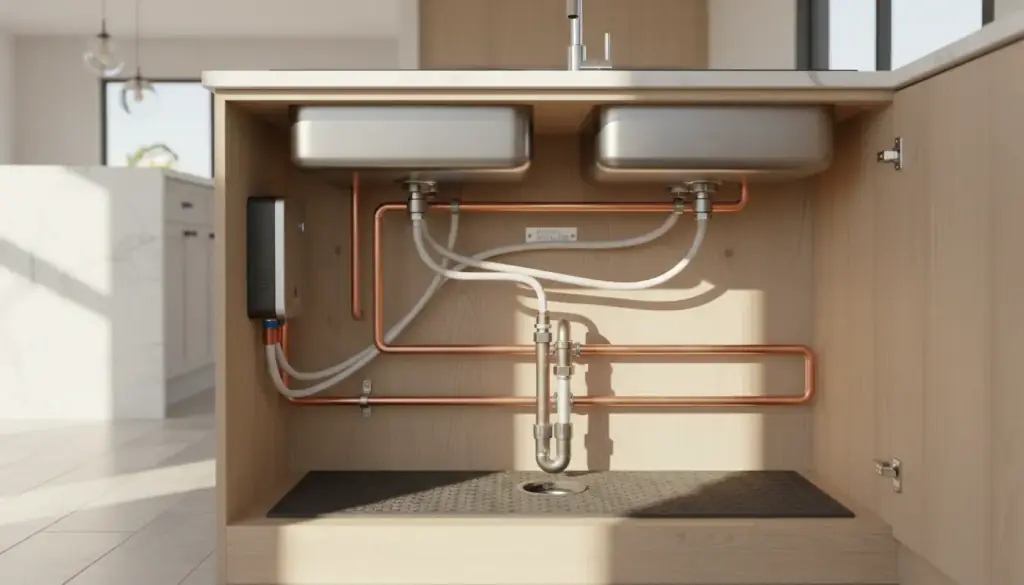
A toilet that runs for a few seconds every half hour and a faucet that drips into the sink all night are the two most ordinary plumbing complaints in a house. They are also two of the most ignorable, until the water bill arrives or the drip starts to stain the basin. Both usually come from a small part that has worn out. Finding the part is the interesting step, and it decides whether you need a repair or a replacement.
A running toilet: the flapper first
Lift the tank lid and look. At the bottom there is a rubber flapper that lifts when you flush and drops back to seal the tank. Over time the rubber hardens, warps, or collects mineral film, and then it stops sealing. Water leaks past it into the bowl, the tank level drops, the fill valve opens to refill, and you hear it run. A simple test is to put a few drops of food coloring in the tank and wait fifteen minutes without flushing. If color shows up in the bowl, the flapper or its seat is leaking.
Other causes are just as common. The chain that connects the handle to the flapper may be too short, holding the flapper slightly open, or so long that it gets caught underneath. The fill valve may be set too high, so water spills down the overflow tube. A float that sits too high does the same thing. If the water is running into the overflow tube, the level in the tank is the problem and not the flapper. Most of these are adjustments or inexpensive parts, and the tank internals are built so an ordinary homeowner can swap them out.
A dripping faucet: it depends on the type
Faucets drip for the same basic reason: something inside no longer seals when the handle is off. What that something is depends on the design. Older compression faucets use a rubber washer pressed against a seat, and a worn washer or a pitted seat lets water through. Cartridge, ball, and ceramic disk faucets use a sealed insert instead, and when the insert wears you replace the insert, not a washer. A drip from the spout points to the internal seal. A drip around the base of the handle usually points to a worn O-ring.
Before taking anything apart, shut off the water at the stop valves under the sink, then open the faucet to relieve pressure. Plug the drain so small parts do not disappear. Take a photo at each step and keep the parts in order, and bring the old cartridge or washer along when you buy a replacement, because faucet parts are famously specific to the model.
When replacing the fixture is the better call
- Parts are no longer made. If the manufacturer is gone or the model is decades old, a repair may mean hunting for a part that does not exist.
- The fixture is corroded or heavily mineral-scaled. The seat and the body themselves are damaged, so a new washer will not hold.
- It has been repaired more than once. The same faucet dripping again after a repair is a pattern, not bad luck.
- A toilet is cracked, rocks on the floor, or leaks at the base. A flapper cannot fix any of these, and a rocking toilet usually means the seal underneath has failed.
- You were going to change it anyway. If the finish is worn or the handle is loose, a repair buys time on a fixture you already dislike.
In plain terms: when the problem is a part, fix the part. When the problem is the body or the seat, or when the repair keeps failing, replace the fixture. Replacement also gives you a chance to choose something that fits how you use the sink or bathroom now.
The stop valve catch
The weak link in many of these jobs is the shutoff valve under the sink or behind the toilet. Old stop valves can seize, and some start to weep when they are turned after years of sitting still. If a valve will not turn easily, do not force it with a wrench. A valve that fails halfway turns a small repair into a bigger one. That is one reason it makes sense to find your shutoffs before the day you need them. A valve that cannot be trusted can be replaced, which then becomes part of the job.
Leaks you should not wait on
A drip from the faucet spout is a nuisance. Water on the cabinet floor, a soft spot in the vanity base, a stain on the ceiling below a bathroom, or a toilet that leaks around the base is something else. Water that escapes into a floor or wall causes damage you do not see until later. If you find that kind of leak, shut off the water supply to that fixture, or the main valve if you cannot isolate it, and get it looked at promptly.
Plumbing help in Murfreesboro and Smyrna
Viking Handyman Services describes its plumbing work as solutions to address leaks and other common issues, including replacement of faucets, sinks and toilets. The details are at /services/plumbing. If you are in Rutherford, Williamson or Wilson County and want someone to look at a fixture before you decide between a repair and a replacement, send a note through /contact or call (615) 476-0089. A photo of the fixture and the shutoff valve helps.
Viking Handyman Services, LLC, (615) 476-0089
Call (615) 476-0089More articles
How to Write a Honey-Do List a Handyman Can Finish in One Visit
The difference between a list that gets finished and one that turns into three trips is mostly in how each line is written.
Mounting a TV on Drywall: What Decides Where It Can Go
The wall you want and the wall that can carry the screen are not always the same wall. Four checks tell you which one you have.