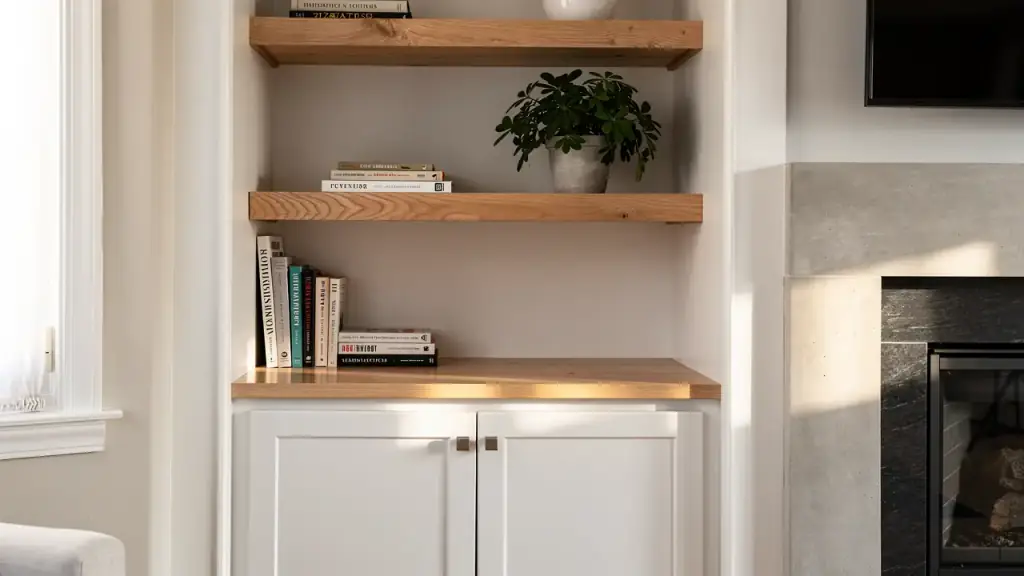
Measure the space before the saw comes out
Carpentry in an older Murfreesboro house starts with a tape and a level, because almost nothing in a house is as square as the plans say it should be. Walls lean a little, floors dip toward the middle of a room, and a corner that reads ninety degrees on paper may be closer to eighty-eight. Measuring an alcove at the top, the middle and the bottom shows how far it drifts, and that drift decides how a shelf or a cabinet face has to be cut.
Viking Handyman describes this work as tailored carpentry that fits your home's unique needs, and the fitting is the whole job. A shelf cut to one tape reading will bind at one end and leave a gap at the other. Scribing the board to the wall, or leaving a small reveal on purpose, is how a Smyrna hallway or a Rutherford County kitchen alcove ends up looking built in rather than bolted on.
Shelving and trim that sit true
Shelving is where most people first meet the problem of a wall that is not flat. A floating shelf wants a cleat fixed into studs or the right anchor in drywall, and a long run of shelves wants one level line struck and followed, not eyeballed board by board. Freestanding units should be fastened back to the wall so a loaded top cannot pull them forward. Weight is the question to settle first, because books, dishes and a row of plants ask very different things of a bracket.
Trim is the same discipline at a smaller scale. Baseboard and casing hide the gap between a wall and a floor that never quite agree, and the joint that looks tight is usually coped or scribed rather than simply cut at an angle. Nail holes get filled and seams get caulked so the finish line reads clean. Tell Chris Sias what the room looks like now and what you want from it, and the work can be sorted from there.
Where a minor renovation starts and stops
Their own phrase is "from shelving to minor renovations," and the useful part of a phrase like that is the boundary. A minor renovation is work a carpenter can scope from a tape measure and a conversation: a built-in nook, a section of trim redone, a cabinet face or a closet reworked. It stays inside the existing walls and does not ask the house to carry its weight any differently than it does today.
Anything that moves a load-bearing wall, reroutes the main plumbing or electrical, or changes the footprint of a room belongs to a larger project with its own trades and planning. Knowing that line early saves everyone a wasted visit. If you are in Murfreesboro, Smyrna or elsewhere in Rutherford, Williamson or Wilson County and are not sure which side your idea falls on, call Chris Sias at (615) 476-0089 and describe it.